
Infrastructure as Code
With dynamically defined infrastructure, scaling and migration are problems of the past – if the prerequisites are in place.
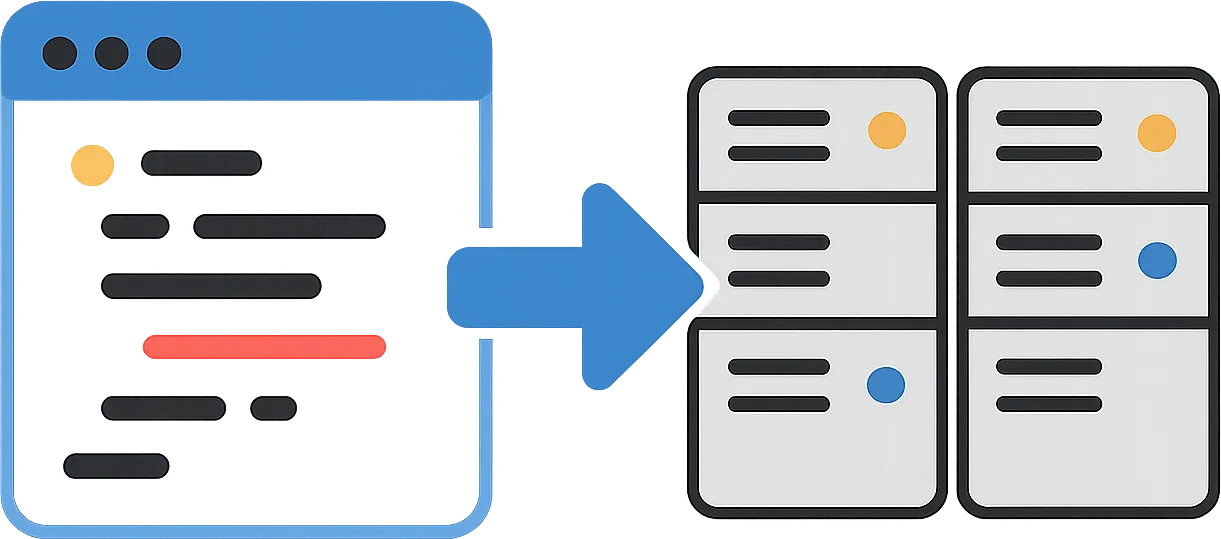
Infrastructure as Code (IaC) describes IT infrastructure in a machine-readable language. Tools such as Terraform, OpenTofu or Pulumi build the complete infrastructure from that description automatically – reproducible, verifiable, versioned.
Why now?
The demands on IT operations have shifted: alongside security and business continuity, cost and speed now count. Agile software development requires more environments and faster deployments – with efficient operations at the same time. The cloud is readily proposed as the answer, but without transparency and know-how it quickly turns into a security risk and a cost trap.
The principle
The idea behind IaC: describe the desired infrastructure state completely and treat that description like source code – managed in a source code management system. Infrastructure then gets access to the same methods as software:
- CI/CD pipelines: syntactic (linting) and semantic checks (plan/verify), applied only after approval,
- branching and tagging: managing different versions and states of the infrastructure,
- code reuse: identical elements managed, tested and reused separately.
The result: resource requests are answered with a simple code change – and resources are removed just as quickly, protecting the budget. Reusing tested elements improves security. Documentation writes itself as a by-product: the SCM logs every change to the infrastructure – a gift for any IT audit.
The prerequisites
IaC does not run by itself:
- Responding quickly to requirements presupposes knowing them.
- Work processes must be adapted; existing systems migrated.
- New tools demand training and practice.
- Automation requires standards – without them you merely automate the chaos.
Do this homework, and you get an infrastructure where scaling and migration truly are problems of the past.